


The End of Shoppable Collections and What It Means for Amazon
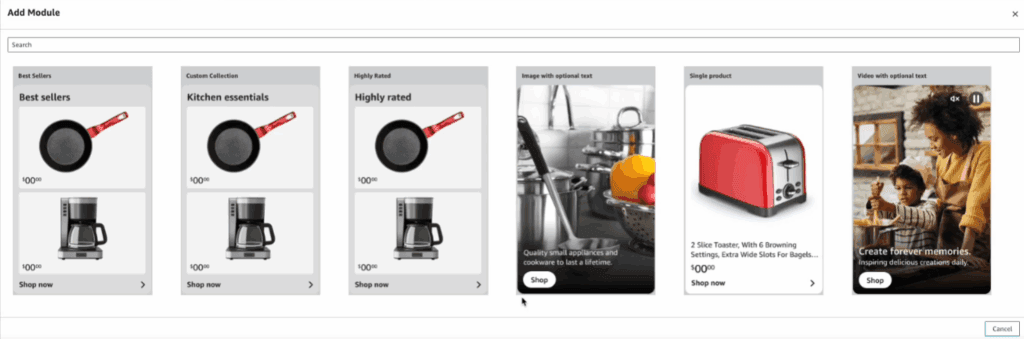
When it comes to platforms owned by technology giants, many of us have become depressingly familiar with the phrase “easy come, easy go”. This applies even to Amazon’s retail business, and online veterans will tell weary tales of dozens of new features and changes launched without any fanfare (or, even, notice), only to disappear with similar silence months later. The latest of these was Shoppable Collections.
What was Shoppable Collections?
As we reported back in September, the Shoppable Collections beta was a new feature Amazon released for their PDPs. It sat as an alternative to the Brand Story slot on the page, and represented an opportunity to include curated product selections on a page that is usually dominated by algorithmic content. Also, interestingly, it allowed the chance for brands to include video content in the mid-section of a PDP. The apparent intent was to drive discovery and upsell, often by driving traffic to the Brand Store rather than keeping the purchasing decision restricted solely to the PDP itself.
What happened to it?
Back In mid-February, Amazon announced to users of its Vendor Central platform that the beta had ended and the feature was being deprecated. The slot would now revert to solely being used for Brand Story content, and any pages without that would see the space go unutilised.
As with most beta testing, Amazon made no metrics or reasoning available to explain why this decision was made. Reasonable speculation could point to poor uptake by brands, underperforming conversion metrics, or a disappointing effect on customer purchase journeys.
What can this tell us about Amazon?
The interesting thing is that, even though this feature has been deprecated, its existence and purpose seems to suggest that Amazon are putting more of a focus on curated shopping experiences, and recognising the benefits a strong brand presence can have on driving upsell and additional conversion. For a long time, brands with any sort of recognisable identity have been strongly encouraged to set up a branded space on the Amazon platform. As mentioned previously, when done well these Brand Stores can have a hugely beneficial effect, especially in countering the downside of the largely search- or recommendation-based customer journeys that make up the modern shopping experience on the Amazon platform.
By adding the Shoppable Collections module to PDPs, Amazon displayed a desire to incorporate elements of this alternative purchase journey to PDPs that have long been dominated by algorithmic recommendations of similar products, often by competing or no-name brands. With more branded shopping options, Amazon may be trying to tap into the many benefits of brand loyalty and complementary product ranges.
Although this experiment failed to produce any features that lasted, it seems clear that Amazon continues to have a focus on quality product content, and recognises the power and upside of allowing brands to strengthen their identity on a platform that, by its very nature, can often seem a morass of nameless, discount items.